
Hongdae often gets summarized by a single crowded pedestrian street. Eoulmadang-ro, the central neon vein of the district, draws massive international crowds daily to watch synchronized dance covers and amateur vocalists. It is a loud spectacle, but it is not where the local creative class actually lives. The heavy commercialization of the main strip pushed the university students, indie musicians, and underground artists into the periphery years ago.
If your travel goal is to build genuine connections with the people who shape this neighborhood, you need to change your coordinates. You have to seek out the specific spaces where the friction of daily life slows down enough for a conversation to start.
1. The Open-Air Social Grid: Gyeongui Line Forest Park Lawns
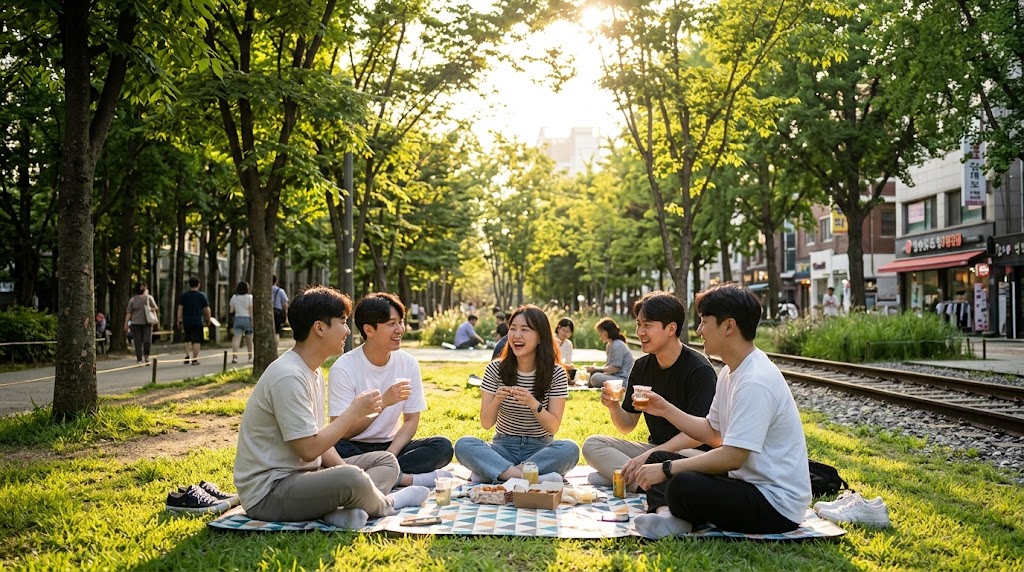
The old ground level tracks of the Gyeongui railway line used to divide this sector of western Seoul. Today, those tracks are buried deep underground, and the surface has been converted into a massive linear green park stretching straight through the heart of Yeonnam-dong. Locals call it Yeontral Park, a direct nod to New York’s green space, but the culture here is entirely distinct. On any warm summer afternoon, the grass lawns fill up with local university students, young designers, and neighborhood residents. They bring simple plastic picnic mats, known as dotjari, and set up camp for hours.
This park functions as Hongdae’s outdoor living room because it lacks the commercial gatekeeping of a cafe or bar. You don’t need a reservation. You just step into a pyeon-ui-jeom, the local convenience store, grab a draft beer or a sweet peach ice cup pouch drink, and find a patch of grass.
The interaction dynamic here is remarkably low-friction. Locals often bring their dogs, strum acoustic guitars, or open boxes of fried chicken. Striking up a conversation is a matter of basic proximity. Sharing convenience store snacks like Saeu-kkang, a classic local shrimp cracker, or asking for advice on nearby delivery spots is a natural entry point. The park sits right next to Hongik University, meaning the demographic skews heavily toward open-minded students who are often eager to chat with travelers and share their favorite neighborhood maps.
2. Intentional Connection at Organized Language Lounges
Cold approaching strangers in a foreign city can be exhausting, especially when language barriers exist. To eliminate this social friction completely, you can pivot to spaces specifically engineered for cross cultural connection. Lounges like GSM Terrace in Hongdae operate as permanent hubs where English speaking locals and international travelers meet intentionally. Many Seoulites who frequent these lounges are university students or young professionals who have lived abroad and want to maintain their global perspectives.
The layout functions like a casual pub mixed with a board game cafe. Instead of sitting in isolated groups, visitors are guided to communal tables based on language comfort. The entire environment is designed to break the ice naturally. You might find yourself playing a round of a simple card game or discussing local travel recommendations over a casual drink.
It is a highly efficient environment for travelers operating on a compressed schedule. You don’t have to guess if the person next to you wants to talk, they came to the venue for that exact purpose. Many long term friendships and local tour guides are sourced right at these tables, cutting through the superficial small talk.
3. The Subculture Sanctuary of Sangsu and Hapjeong Vinyl Bars
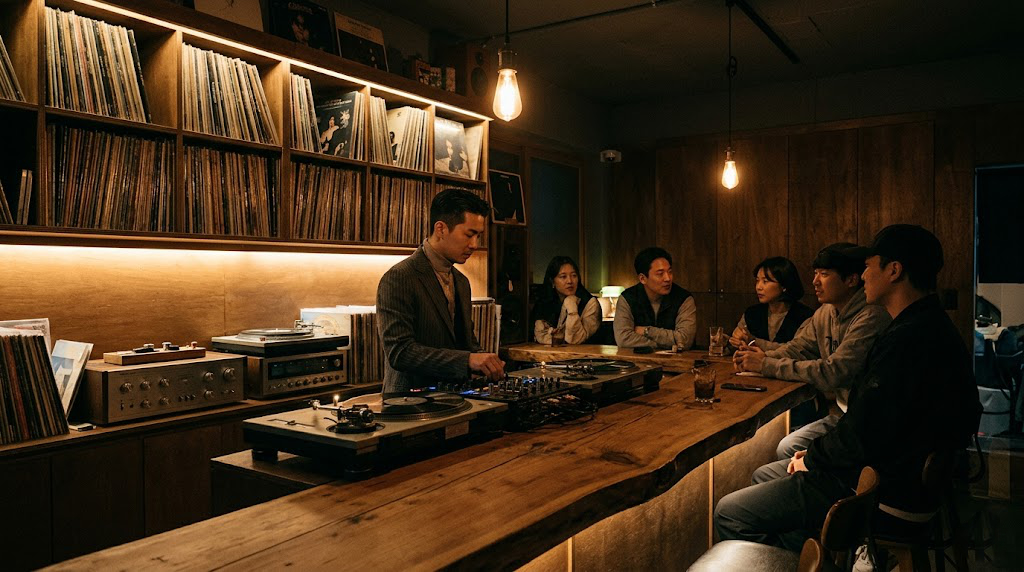
To find the true subculture purists, you have to walk away from the massive commercial dance clubs that line Hongdae’s main nightlife district. Those mega venues are loud, dark, and built for isolation. The real local creative crowd moves toward the borders of Sangsu-dong and Hapjeong-dong, two sub districts that still retain the grit and independence Hongdae was originally famous for. Vinyl bars have become the ultimate sanctuary for this crowd.
Venues like Manpyong Vinyl Store offer an intimate environment where music dictates the social rhythm. Located on a quiet second floor, the walls are lined with thousands of vintage records. Local DJs spin everything from 1980s Korean city pop icons like Kim Hyun-chul to underground synth wave tracks. The space is intentionally compact, forcing a natural physical proximity.
Patrons sit along a raw wooden bar counter or small stools, sharing close quarters. The shared auditory experience creates an immediate bond. Asking a local about the specific record sleeve design on display or discussing the analog audio setup is a completely natural conversation starter. You meet graphic designers, indie label assistants, and local fashion students who treat these bars as their weekend lounges. The conversations here are deeper, focusing on art, design, and the shifting subcultures of Seoul.
4. The Shared Table Ritual at Local Pochas
Food is the ultimate social lubricant in South Korea. While fine dining restaurants separate diners with private walls, a local pocha, short for pojangmacha, which translates to an indoor street food style tent bar, does the opposite. In Hongdae, spots like Sanwoolim 1992 redefine this culinary socialization. Located near the Sanwoolim Small Theater, this historic pub specializes in traditional Korean rice wines, known as makgeolli, and regional craft beers.
The physical layout of a traditional pocha or a craft makgeolli bar encourages group interaction. Tables are placed close together, and the dishes are designed entirely for sharing. When you order a large, hot savory pancake, called jeon, it occupies the exact center of the table, creating a communal focus.
In Korean drinking culture, it is customary to pour drinks for others rather than yourself, using two hands to show respect. This cultural rule opens an immediate door for interaction between adjacent tables. If you are sitting next to a group of locals, offering to pour them a sample of a rare regional rice wine or asking for their recommendation on which craft brew to order next is considered polite and highly engaging. It frequently leads to tables merging, food plates being passed between groups, and a direct immersion into the loud, joyful community spirit that defines local Seoul nightlife.
5. Independent Bookstores and Print Culture Hubs
During the day, Hongdae’s intellectual and artistic crowd gathers in the quiet pockets around the Gyeongui Line Book Street. This sector of the park features pavilions designed like minimalist train cars, each dedicated to independent publishing, poetry, and local print art. Independent music shops like Gimbap Records or smaller indie bookshops serve as quiet community hubs for the neighborhood’s introverted creatives.
These are not just retail shops, they are curation projects. Locals who frequent these spaces care deeply about independent media, print art, and vinyl culture. The quiet, slow-paced environment allows for deliberate interactions.
You can strike up a conversation over a specific album sleeve or a localized art zine. The people you meet here are often deeply embedded in the local indie scene. They can recommend underground galleries, independent film screenings, or hidden basement gigs that never show up on mainstream travel apps, giving you a highly accurate, unfiltered look at the neighborhood’s true cultural pulse.