High-rise shopping malls and climate-controlled department stores dominate Seoul’s modern skyline. Yet, the city’s culinary soul remains anchored in its traditional markets, known locally as sijang. These covered, sprawling street grids function as low-tech sensory hubs where generations of recipes, street-level social rituals, and local food economies intersect.
Navigating a Seoul market can feel chaotic for first-time visitors. A single alleyway packs dozens of vendors sizzling mung bean pancakes, slicing raw beef, and scooping steaming rice cakes into paper cups. To maximize your time and appetite, you need a clear blueprint for where to go, how to order, and what to eat at the city’s three most iconic markets.
Gwangjang Market: The High-Density Street Food Ritual
Located near Jongno 5-ga Station on Line 1, Gwangjang Market is Seoul’s oldest continuously operating traditional market, dating back to 1905. While parts of the upper floors deal in vintage clothing and silk textiles, the central ground floor cross-alley is a dedicated street food ecosystem.
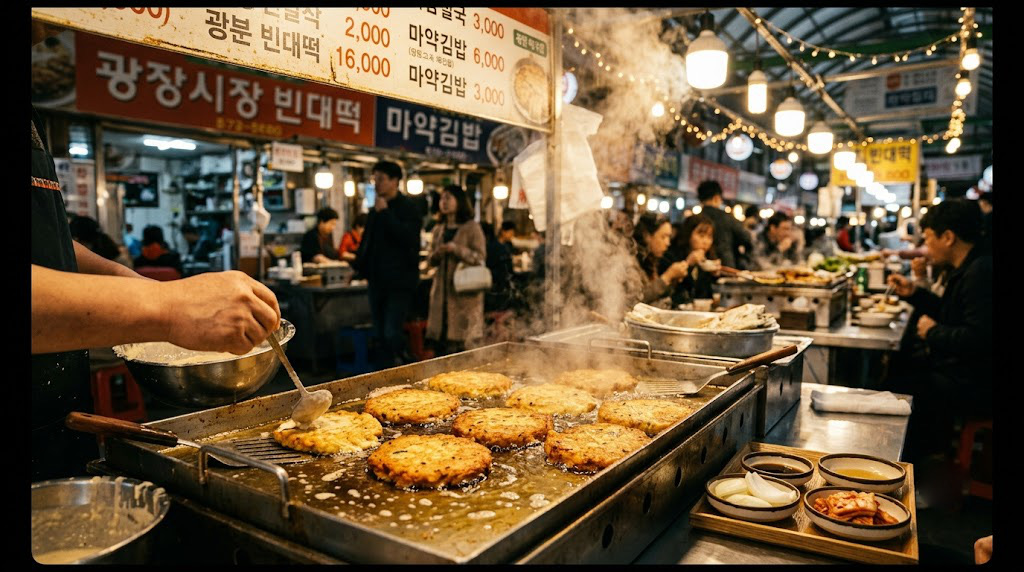
The main food corridor stays packed from morning until late at night. You walk through dense clouds of steam, surrounded by long rows of wooden bench stalls. Each vendor specializes in just one or two items, cooking them directly in front of seated diners.
What to Eat at Gwangjang
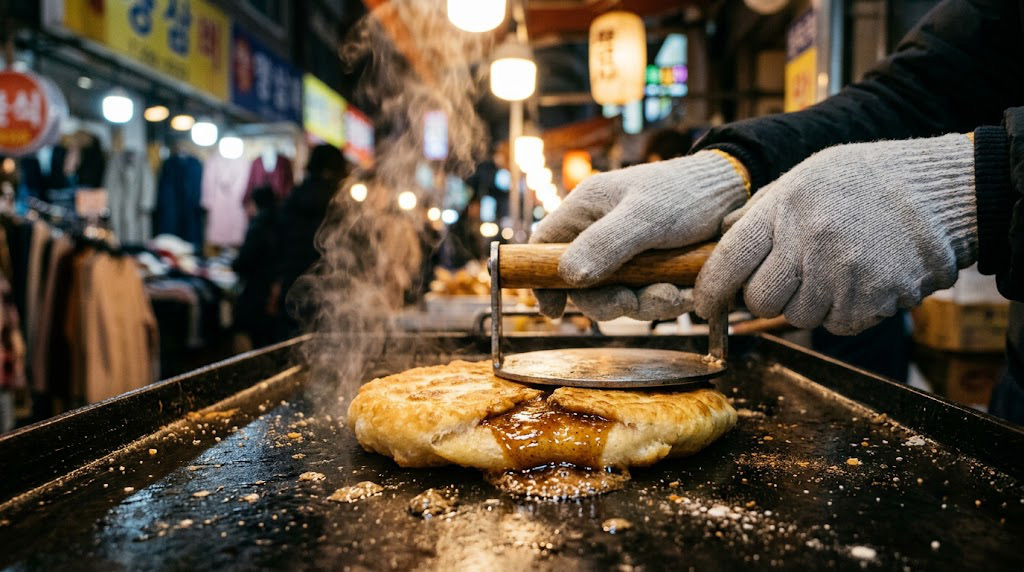
- Bindaetteok (Crispy Mung Bean Pancakes): Whole mung beans are ground on stone mills right at the stalls, mixed with scallions and bean sprouts, then shallow-fried in massive vats of oil. The result is a golden pancake with a crunchy exterior and a soft, savory interior. Dip it in the soy sauce with pickled onions served on the side.
- Mayak Kimbap (Addictive Mini Seaweed Rolls): These bite-sized rice rolls contain pickled radish, carrot, and spinach wrapped in sesame-oiled laver seaweed. The nickname mayak, meaning narcotic, comes from the sweet mustard dipping sauce served alongside them.
- Yukhoe (Raw Beef Tartare): Venture off the main corridor into Yukhoe Alley. Stalls serve thinly sliced raw beef dressed in sesame oil, garlic, and soy sauce, topped with a fresh egg yolk and crisp Asian pear slices. Pair it with a bowl of warm beef radish soup.
Market Protocol
Gwangjang operates on bench seating dynamics. Pick a stall with an open seat, sit down directly, and order verbally or point to the display items. Vendors expect quick turnover. Eat your food, pay when you finish, and make room for the next diners. Carrying paper cash in 1,000 and 5,000 KRW notes makes paying much smoother, though many established stalls now take credit cards or transport cards.
Tongin Market: The Brass Coin Bento Box Protocol
Tucked west of Gyeongbokgung Palace in the Seochon neighborhood, a short walk from Gyeongbokgung Station on Line 3, Tongin Market offers a unique, interactive dining format. Instead of sitting at individual stalls, visitors purchase traditional brass coins to build a customized bento lunch box through the Dosirak Cafe program.
The market itself is a narrow, single-lane covered alleyway. It feels quiet and residential compared to Gwangjang, serving as a neighborhood shopping street for local residents alongside hungry travelers.
How the Lunchbox Cafe Works
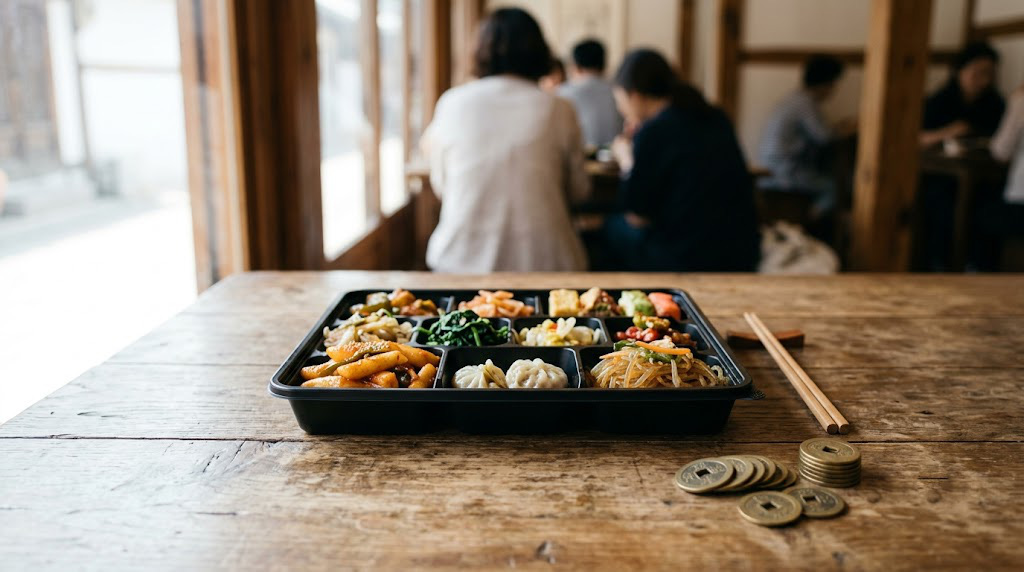
Head to the customer service center on the second floor to buy a stack of ten yeopjeon, replica brass coins with a square hole in the middle, along with an empty plastic tray. Each coin costs 500 KRW, so a standard bundle runs 10,000 KRW.
Walk down the main market corridor. Stalls displaying a small pink sign accept your coins in exchange for small portions of food. Most items cost between two and four coins. Once your tray is filled, return to the second-floor cafe space to buy rice and soup for a few remaining coins or cash, then sit down to eat.
What to Eat at Tongin
- Gireum Tteokbokki (Oil-Tossed Rice Cakes): Unlike standard tteokbokki simmered in a thick red pepper sauce, Tongin’s signature version features chewy rice cakes tossed in chili oil and soy sauce, then seared on a flat iron griddle. The exterior turns crispy while the inside stays soft.
- Jeon (Fritters) and Neobiani (Pork Patties): Use your coins to pick up individual pieces of pan-fried zucchini, minced pork patties, and egg-washed fish fillets.
- Gyeran-mari (Rolled Omelet): Thick, rolled egg slices packed with diced vegetables serve as a clean, mild palate cleanser alongside the spicier griddle dishes.
Mangwon Market: The Local Trend and Snack Ecosystem
If Gwangjang represents history and Tongin offers novelty, Mangwon Market in Mapo-gu reflects current neighborhood youth culture. Located near Mangwon Station on Line 6, just one stop from Hongdae, this market caters to local residents buying daily groceries alongside young Seoulites hunting for trendy street snacks.
The market runs along a modern covered avenue lined with permanent storefronts. Prices here stay lower than in the heavy tourist centers, making it a favorite stop before heading down to nearby Mangwon Hangang Park for an outdoor picnic.
What to Eat at Mangwon
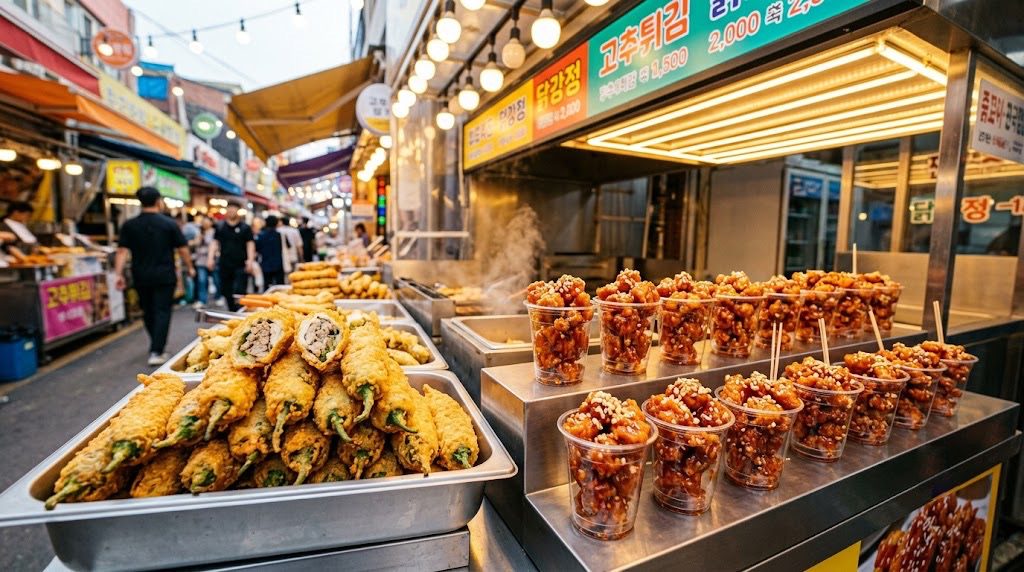
- Dakgangjeong (Sweet and Spicy Crispy Chicken): Mangwon is famous for its competitive fried chicken stalls, like Q’s Dakgangjeong. Boneless chicken bites are double-fried for maximum crunch and coated in sauces ranging from sweet garlic glaze to fruit-infused chili pepper. Vendors serve them in paper cups with fried rice cakes mixed in.
- Gochu-twigim (Stuffed Deep-Fried Chili Peppers): Stalls like Wooyirak take large green chili peppers, stuff them with seasoned pork, tofu, and glass noodles, dip them in a light batter, and fry them until crisp. They are savory, lightly spiced, and pair perfectly with a cold bottle of makgeolli, local unrefined rice wine.
- Hotteok (Sweet Stuffed Griddle Cakes): Dough made from glutinous rice flour is filled with brown sugar, cinnamon, and chopped peanuts, then pressed flat on a hot griddle. The sugar melts into a molten syrup inside the crispy dough shell. Eat slowly to avoid burning your tongue.
Market Etiquette and Survival Matrix
| Market | Core Vibe | Must-Try Dish | Access Point |
| Gwangjang Market | High Energy, Historic, Dense | Bindaetteok & Yukhoe | Jongno 5-ga Station (Line 1, Exit 8) |
| Tongin Market | Interactive, Historical, Quiet | Gireum Tteokbokki | Gyeongbokgung Station (Line 3, Exit 2) |
| Mangwon Market | Modern Local, Snack-Heavy | Dakgangjeong & Stuffed Peppers | Mangwon Station (Line 6, Exit 2) |
Practical Rules for Market Visitors
Mind the trash system. Public trash cans are rare in South Korean streets. Return paper cups, wooden skewers, and plastic trays directly to the specific stall where you bought your food.
Visit between 11:30 AM and 2:00 PM for peak lunch energy, or around 6:00 PM for dinner. Keep in mind that Tongin Market’s Dosirak Cafe program closes on Mondays, so plan your Seochon neighborhood strolls for later in the week.