A South Korean cafe is not a public utility; it is a micro-spatial rental business. In a city where residential living quarters are hyper-compressed, the cafe functions as the “Third Space” for social and professional operations. Failing to understand the economic logic of this space results in immediate social friction and service denial.
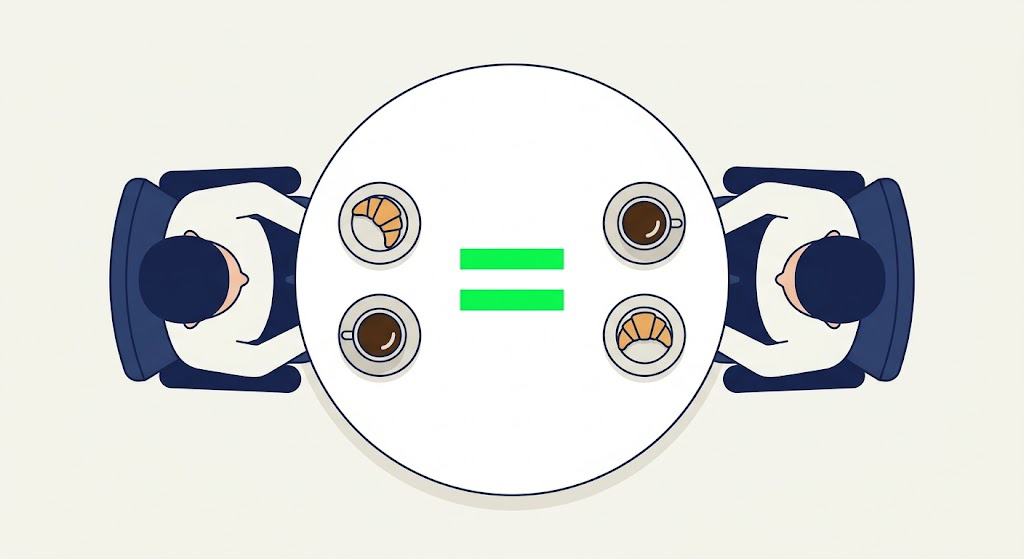
1. The 1-Person-1-Drink Mandate (1인 1음료)
The purchase of a beverage is the legal lease for a chair. In Seoul, the liquid is the secondary product; the primary product is the square footage you occupy.
- The Rule: Every individual in a party must purchase at least one item (typically a drink). Sharing a single 5,500 KRW (approx. $3.77 USD) Americano between two people is a violation of the spatial lease.
- The Penalty: Staff will actively enforce this during the ordering process or ask a non-purchasing party member to vacate the premises.
- Exception: High-end bakeries may allow one drink and one substantial pastry to satisfy the party-of-two requirement, but this is at the discretion of the management.
2. Time-Limit Enforcement (The “Car-Gong” Defense)
The phenomenon of the “Car-gong-jok” (students/workers studying in cafes) has forced a structural shift in seating logic. In high-traffic districts like Seongsu or Hongdae, the spatial lease has a strictly defined expiration.
- The 120-Minute Protocol: Many independent and high-demand cafes now print a “Stay Limit” on the receipt. Typically, this is 2 hours (120 minutes).
- The Power Outlet Embargo: To discourage long-term occupation, many modern “Instagrammable” cafes have removed power outlets entirely. If you require laptop power, you must utilize corporate chains like Starbucks Korea or A Twosome Place, which still prioritize utility over turnover.
3. The Sanitation Gatekeeper (Receipt Logic)
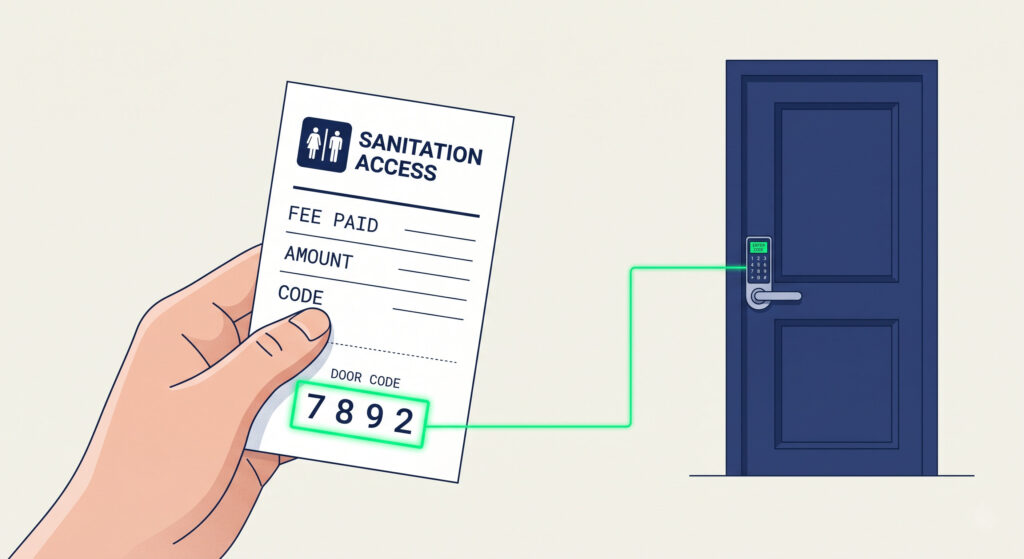
Public restrooms are non-existent in Seoul commercial districts. Sanitation access is gated behind a financial transaction.
- The Protocol: Look at the bottom of your printed receipt. You will find a 4-digit code (e.g., 1234*) or a QR code.
- The Execution: If no code is present, a physical key is often attached to a large object (to prevent theft) located near the pick-up counter. You must secure this key before attempting to locate the restroom, which is frequently located in the building’s common hallway rather than inside the cafe itself.
4. Satellite Mega-Cafes: The Scale and Inheritance Arbitrage
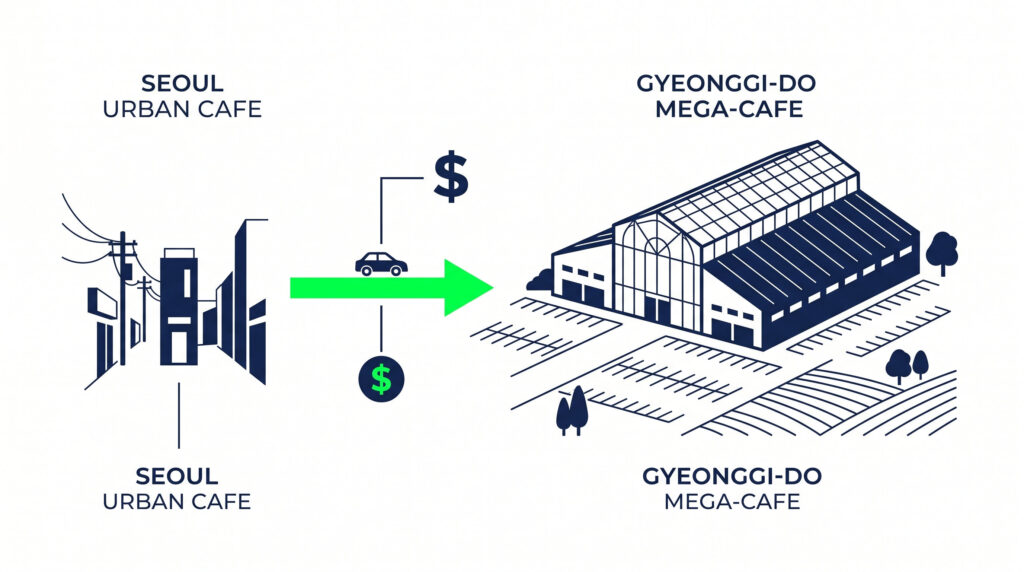
There is a growing phenomenon of “Mega-Bakery Cafes” in satellite cities like Ilsan, Gimpo, and Paju. These structures often exceed 3,000 square meters and feature extreme architectural themes (e.g., Dirty Trunk or Forest Outings).
- The Economic Logic: These are not built for urban convenience. They are strategic real estate holding vehicles and tax optimization mechanisms for wealthy families.
- The Succession Loophole: By registering and operating the mega-bakery as a “Restaurant Business” rather than merely holding vacant land or standard commercial real estate, owners exploit a specific provision in South Korean tax law. This classification allows them to utilize the Family Business Succession deduction. It is a calculated legal maneuver to transfer massive real estate wealth to heirs while drastically reducing or bypassing the country’s highly punitive inheritance and gift taxes.
- The Visitor Protocol: These sites are inaccessible via subway. You must utilize a vehicle. Expect “Seoul Prices”—an Americano will cost upwards of 8,000 KRW (approx. $5.48 USD)—as you are paying for the architectural scale and subsidizing the owner’s wealth-transfer strategy.