
The assumption that a foreign visitor can purchase standard over-the-counter medical supplies at a supermarket or rely on an emergency room for minor ailments in South Korea is a structural error. The domestic healthcare system does not operate on Western retail models; it is governed by a strict legal monopoly and a highly compartmentalized clinic hierarchy.
Operating outside of these parameters will result in massive time loss and exorbitant financial penalties. This protocol outlines the exact mathematical approach to procuring medication and accessing clinical care without friction.
1. The Pharmacy (약국) Monopoly
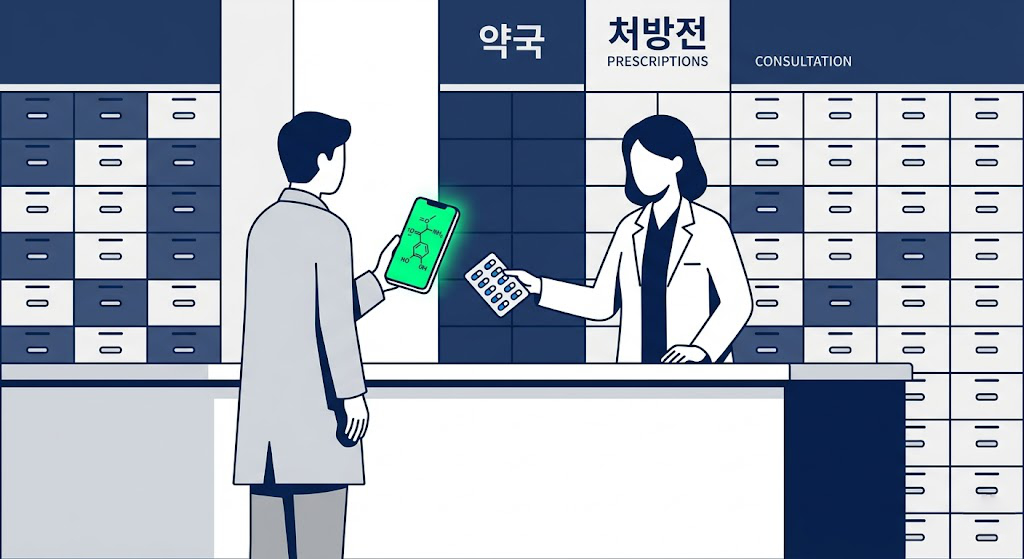
In South Korea, pharmacists possess an absolute legal monopoly over the distribution of nearly all medical compounds. You will not find ibuprofen, melatonin, or high-efficacy cold medicine on the shelves of Olive Young, E-Mart, or standard retail outlets.
The Interaction Protocol:
- The Identification: Pharmacies are identified by the character 약 (Yak) and a green or red cross.
- The Barrier: Medication is stored behind the counter. You cannot physically browse. You must interact with the pharmacist to procure anything beyond basic vitamins.
- The Execution: Do not attempt to describe symptoms using vague English terminology. You must use the exact chemical name (e.g., “Ibuprofen,” “Acetaminophen,” “Cetirizine”) or present a highly specific symptom translation via Naver Papago.
- The Output: You will rarely receive bulk bottles. Medication is typically dispensed in blister packs of 10.
2. The Convenience Store Fallback (안전상비의약품)
Pharmacies generally close by 8:00 PM and are widely unavailable on Sundays. To prevent total system failure during off-hours, the government allows a highly restricted exception to the pharmacy monopoly.
The Midnight Procurement Matrix:
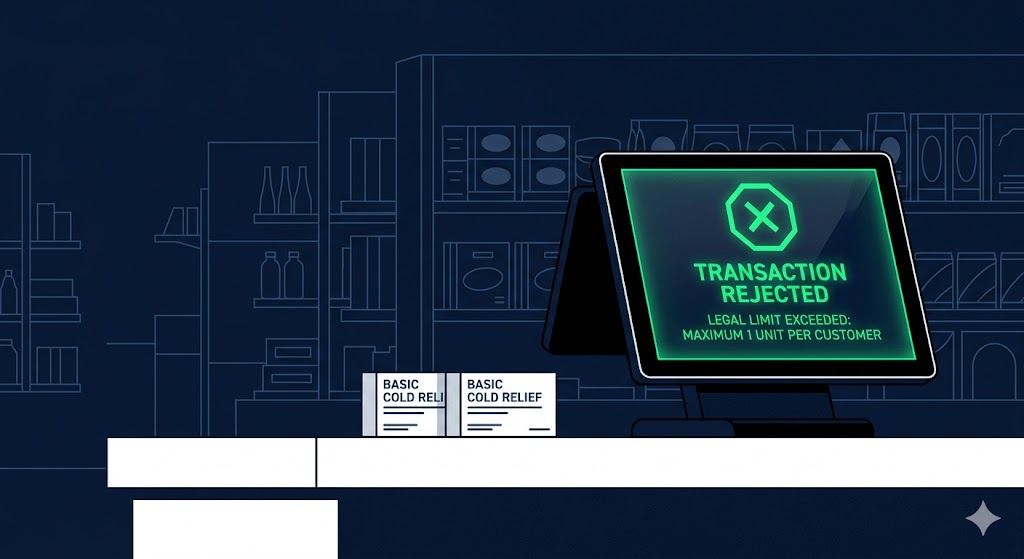
- The Locations: Major convenience stores (GS25, CU, 7-Eleven, Emart24) stock a heavily regulated inventory of “Safe Emergency Medicines” behind the cashier counter.
- The Inventory: This is limited to low-dose Tylenol (Acetaminophen), Brufen (Ibuprofen), Panpyrin (liquid cold medicine), basic digestive enzymes (Festal, Bearse), and medicated muscle patches.
- The Legal Limit: The point-of-sale system legally restricts purchases to one box per category per transaction to prevent hoarding and overdose. Do not attempt to buy multiple boxes of Tylenol; the register will mathematically reject it.
3. The First-Tier Clinic (의원) Efficiency
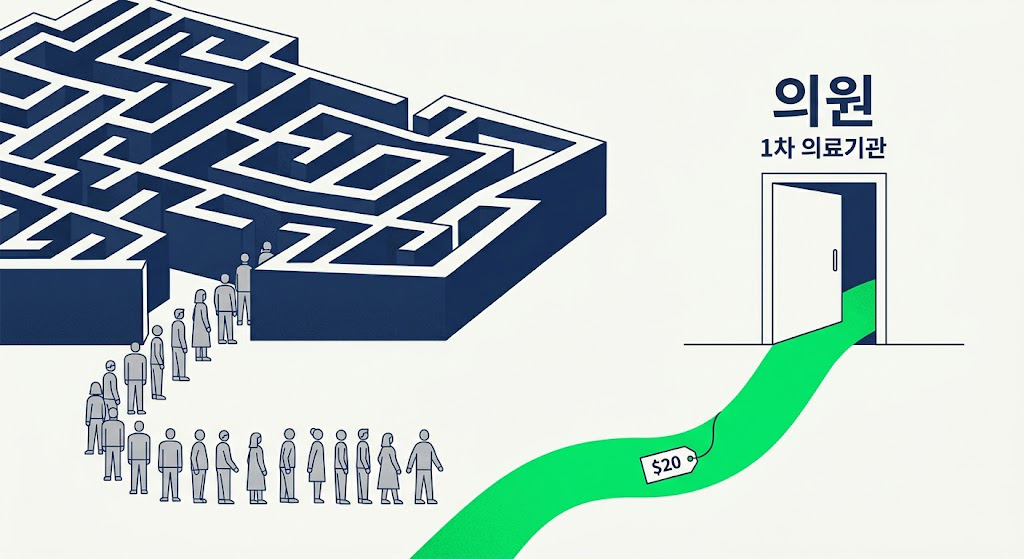
When physical ailments exceed the capacity of over-the-counter medication, foreigners default to massive university hospitals (종합병원). This is a critical operational failure resulting in massive wait times and emergency room fees.
The Korean medical system is built on the efficiency of the highly specialized, first-tier neighborhood clinic (의원).
The Uninsured Financial Reality:
- The Target: Locate specialized clinics in commercial buildings: Internal Medicine (내과) for colds/flu, ENT (이비인후과) for throat/ear issues, or Dermatology (피부과) for skin reactions.
- The Walk-In: Appointments are rarely required. Present your physical passport to the receptionist.
- The Cost: For a foreigner without Korean National Health Insurance, a standard consultation at a first-tier clinic operates on a flat-rate structure, typically ranging from 20,000 to 30,000 KRW (approx. $13.60 to $20.40 USD).
- The Prescription Loop: The doctor will issue a paper or digital prescription. You must take this immediately to a pharmacy (usually located on the ground floor of the exact same building).
4. The Dispensing Protocol (Paper Packets)
The final point of friction for foreigners is the physical format of prescription medication.
Korean pharmacies utilize automated dispensing machines that discard the original pharmaceutical packaging. Your prescription will be handed to you in a continuous strip of sealed, single-dose paper or plastic packets. Each packet contains the exact combination of pills required for one specific time of day (e.g., Morning, Noon, Night).
You must strictly follow the dosing intervals printed on the external envelope. There is no guesswork; the system enforces compliance through physical separation.