
Seoul’s public transportation is honestly world-class. The subways and buses are incredibly fast, super clean, and will get you literally anywhere you want to go. But because millions of people use this system every single day, it only works perfectly because everyone follows a set of unspoken (and spoken) social rules. It’s all about nunchi—the Korean concept of reading the room and being considerate of others.
If you treat the Seoul subway like the transit systems in New York or London, you are going to get some serious side-eye. To help you blend in perfectly and ride like a local, here is everything you need to know about navigating the city without causing a scene.
1. Keep It Quiet and Watch Your Backpack (The Commuter Vibe)
In Seoul, public transit is basically treated as a quiet zone. People are exhausted from long days of studying or working, so the subway is their time to decompress, listen to music, or take a quick nap.
- Volume Control: Treat the train car kind of like a library. Your phone should definitely be on silent. If you absolutely have to take a phone call, you need to do it in a hushed whisper, keep it super short, and cover your mouth. And please, never watch TikToks or play music out loud without earbuds!
- The Strict Food and Drink Ban: Eating food on subways or city buses is a massive no-no. But here is the most important rule that catches tourists off guard: you are legally not allowed to get on a Seoul city bus if you are holding a disposable cup with a drink in it. Even if your iced Americano or bubble tea has a tight plastic lid, the bus driver will literally point at it, shake their head, and refuse to let you on. Finish your drink before the bus arrives, or throw it in the trash!
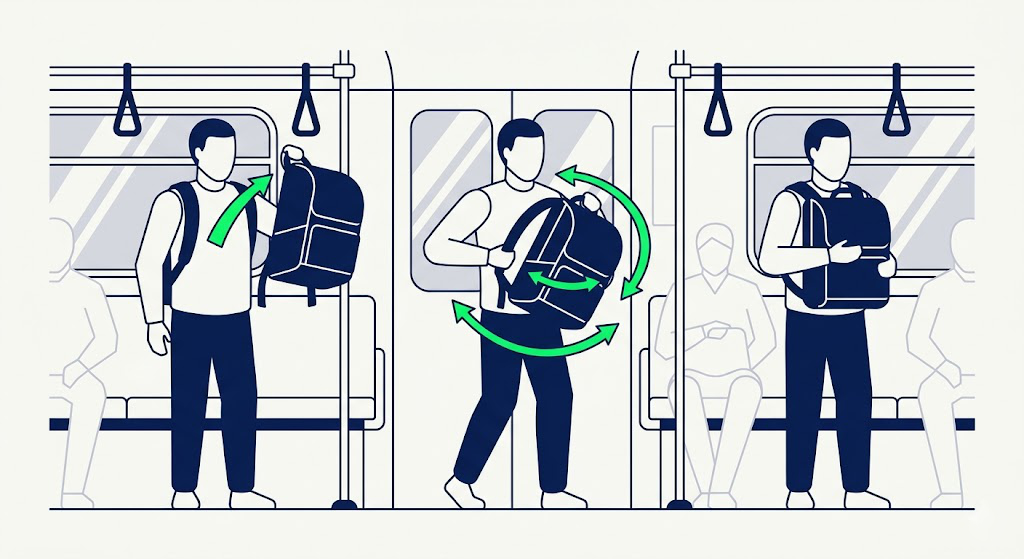
- The “Backpack Hug”: During peak rush hour (especially on the infamous Line 2), the trains get insanely crowded. You will be packed in like sardines. If you are wearing a giant backpack on your back, you are going to be bumping into everyone and taking up way too much space. The polite thing to do is take your backpack off and either hold it by your feet on the floor or wear it on your front like a baby carrier to make room for others.
2. The 2026 Escalator Rule (Stop Walking!)
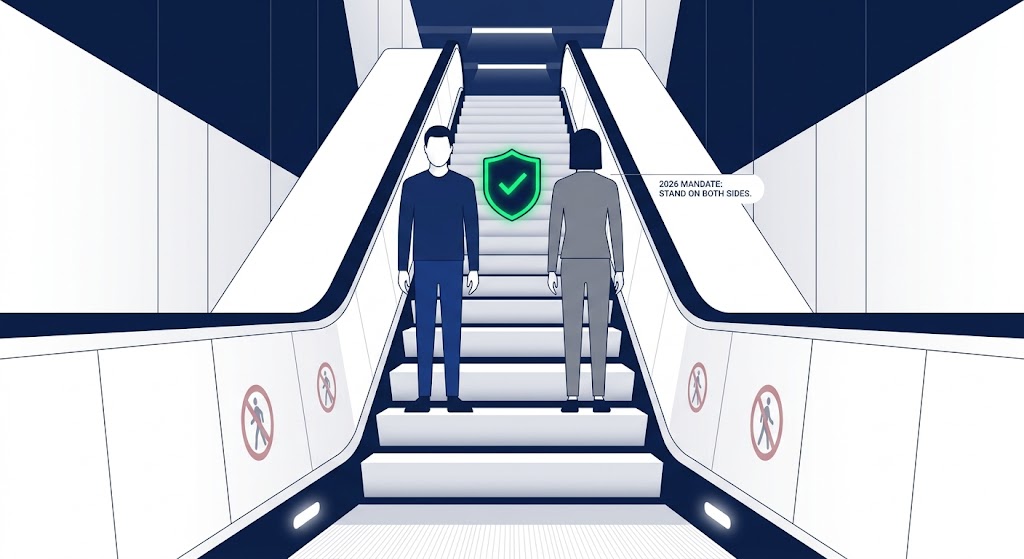
If you watched older travel vlogs or read outdated guidebooks, you probably learned the golden rule of escalators: “Stand on the right, walk on the left.” You need to completely forget that rule right now!
- The Big Safety Update: Starting in 2026, the South Korean government and Seoul Metro launched a huge, strict campaign to get people to stand still on both sides of the escalator.
- Why the Change?: Walking or running up the left side of the escalator was actually causing a lot of serious accidents, people tripping, and the machines breaking down way faster.
- What You Need to Do: When you get on the escalator, just pick a side, hold the handrail, and chill. You will actually see subway safety guards standing near the escalators holding big signs or cute “Stop” bags reminding people not to walk. If you are in a rush, it might feel a little frustrating, but do not try to push past people who are standing on the left side. They aren’t blocking you; they are just following the correct, updated rules!
3. The Unspoken Rules of Subway Seats (And the “White Lie”)
Seating on the Seoul subway isn’t a free-for-all. The seats are very strictly color-coded and categorized, and if you sit in the wrong spot, it is considered a huge faux pas.
- The “Never Sit Here” Zones: At the very ends of every single subway car, there are seats (usually marked with red signs) strictly reserved for the elderly, people with disabilities, or injured people. In the middle sections of the train, you will see bright pink seats. These are exclusively for pregnant women (sometimes they even have a little pink plushie sitting on them!). Do not sit in these seats. Even if the entire train is completely empty and your feet hurt, you just leave them open.
- Giving Up Your Regular Seat: If you are sitting in a normal seat and a very elderly grandpa or grandma gets on the train, the polite thing to do is offer them your spot.
- How to Do It Right: Don’t just point at the seat from far away. Stand up, gesture toward the empty seat with an open hand, and say, “여기 앉으세요” (Yeo-gi an-jeu-se-yo / “Please sit here”).
- The “White Lie” Trick: Older Koreans are super polite and will almost always wave their hands and say “No, no, it’s okay!” because they don’t want to bother you or make you stand. You have to insist a little bit. The absolute best local trick is to use a harmless white lie. Just say, “저 곧 내려요” (Jeo got nae-ryeo-yo / “I’m getting off soon”). This makes them feel totally guilt-free about taking your seat, even if you are actually riding for five more stops!
4. Panic Mode Averted: How to Find Your Lost Stuff
Losing your phone, wallet, or shopping bags on a train in a foreign country sounds like an absolute nightmare. But Seoul is famous for being a “high-trust society” (people literally leave their laptops on cafe tables to go to the bathroom). The transit system has an amazing, super-organized Lost and Found setup.
- Step 1: Remember the Numbers: The second you realize you left something on the train, don’t panic. Look at the clock. Write down the exact time, the Station Name you just got off at, and the Subway Line Number. If you can, look at the screen doors on the platform; there are usually sticker numbers telling you exactly which car you were in (like 4-2). This information makes it so much easier for the staff to find your stuff.
- Step 2: Use the Magic Phone Number (1330): If your Korean isn’t great, do not stress. Dial 1330 on any phone. This is the official Korea Tourism Organization hotline, and it is totally free. They have English translators working 24/7. Just explain what happened, and they will literally call the specific subway station staff for you and translate everything in real-time.
- Step 3: The Lost and Found Centers: If the subway workers find your item, they will hold it for you. Huge items or things left for a few days usually get sent to specific centralized Lost and Found hubs for each line (for example, City Hall Station handles lost stuff for Lines 1 and 2).
- Step 4: The LOST112 Website: If you dropped something super valuable like a passport or a wallet and it gets handed over to the police, they will log it into a massive nationwide database called LOST112. You can actually go on their website and search to see if someone turned your item into a police station anywhere in the country.