
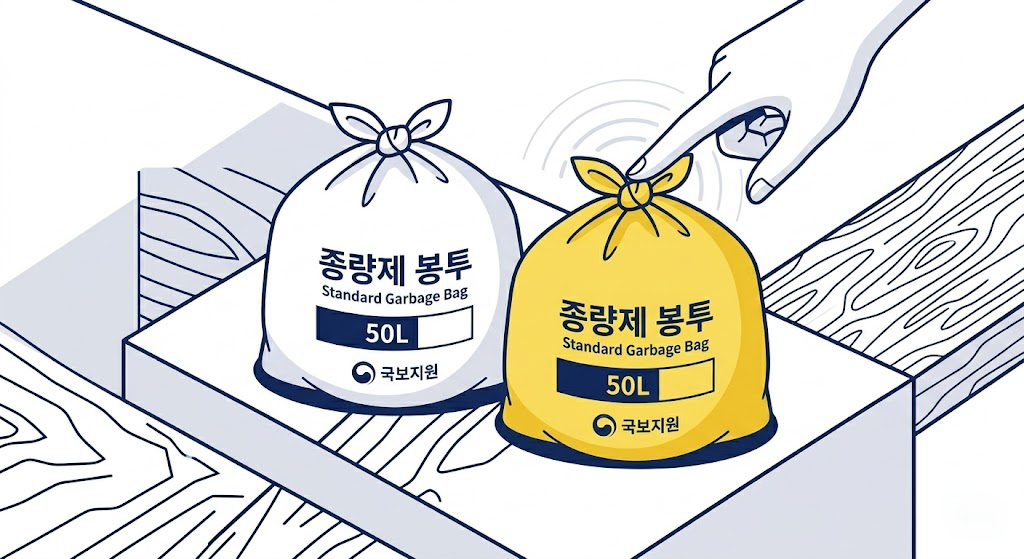
South Korea maintains one of the strictest waste management systems in the world (Jongnyangje). For a foreigner, “throwing something away” is a complex bureaucratic process involving specific bag colors, designated locations, and strict timing. Failure to comply results in heavy fines and neighborhood conflict.
1. The Bag Color Protocol (Standardized Waste)
You cannot use standard grocery bags or black trash bags. You must purchase “Government Authorized Bags” (Jongnyangje-bongtu) at any convenience store or supermarket.
| Waste Type | Bag Color | Usage Rule |
| General Waste | White / Yellow | Anything that cannot be recycled or turned into food waste. (e.g., used tissues, diapers, old shoes). |
| Food Waste | Yellow / Orange | Strictly organic food waste only. Must be liquid-free before bagging. |
| District Specific | Varies | Bags are only valid in the specific district (Gu) where they were purchased. A Mapo-gu bag cannot be used in Gangnam-gu. |
2. The “Food vs. Trash” Logic Test
The most frequent error for foreigners is misidentifying food waste. The rule is simple: If an animal can eat it, it is food waste.
The Action Checklist (Items that are NOT food waste):
- [ ] Hard Shells: Eggs, clams, crabs, and nuts go in General Waste.
- [ ] Large Bones: Chicken, pork, and beef bones go in General Waste.
- [ ] Seeds/Pits: Large pits from peaches or mangoes go in General Waste.
- [ ] Tea/Coffee: Used tea bags and coffee grounds go in General Waste.
3. The Recycling Categorization Matrix
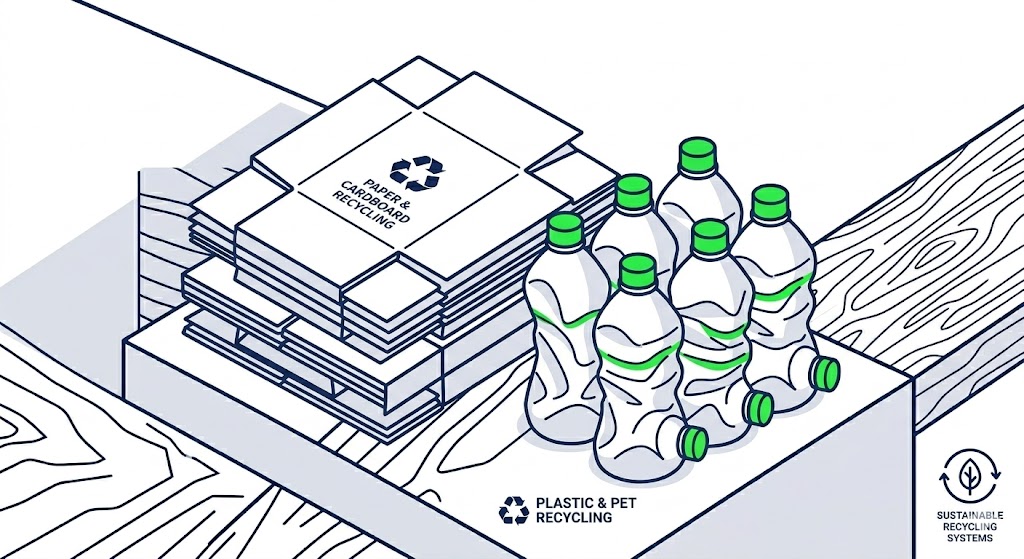
Recycling is free but requires extreme physical discipline. All items must be washed and dried before disposal.
| Category | Protocol |
| Plastic | Remove all labels. Flatten the bottle. Must be transparent. |
| Paper | Flatten all boxes. Remove all plastic shipping tape and staples. |
| Vinyl | Clean plastic wraps and snack bags. Pack them into a single transparent bag. |
| Glass/Cans | Rinse thoroughly. Remove caps. Do not break the glass. |
4. Disposal Timing and Location
Waste is not collected every day. Each neighborhood (Dong) has a designated “Disposal Window.”
- The Location: Look for a designated corner near your building entrance or a specific plastic bin area.
- The Time: In most residential areas, waste must be placed outside between 20:00 and 24:00. Placing trash out during the day is a fineable offense.
- The Penalty: Illegal dumping is monitored by CCTV. Fines typically start at ₩100,000 and can escalate quickly.
PRO TIP:
When buying bags at a convenience store, ask for: “Sseuregi-bongtu isseoyo?” (Do you have trash bags?). Specify the size in liters—20L is the standard for a 1-2 person household.