
Medical recovery in Gangnam demands a specific food strategy. Thousands of international visitors arrive in this district each month for cosmetic, orthopedic, and dental procedures. Once you leave the clinic floor and head back to your hotel room in Sinsa, Apgujeong, or Yeoksam, your immediate challenge is finding meals that promote tissue healing without irritating delicate incisions or causing sodium-induced swelling.
Korean cuisine excels at recovery food. Local food culture treats medicine and dining as parts of the same holistic system, a concept known as yaksik-dongwon. You do not have to settle for bland room service broths. Gangnam is packed with specialized kitchens serving clean, nutrient-dense dishes designed to reduce post-op inflammation, soothe tender jaws, and rebuild strength.
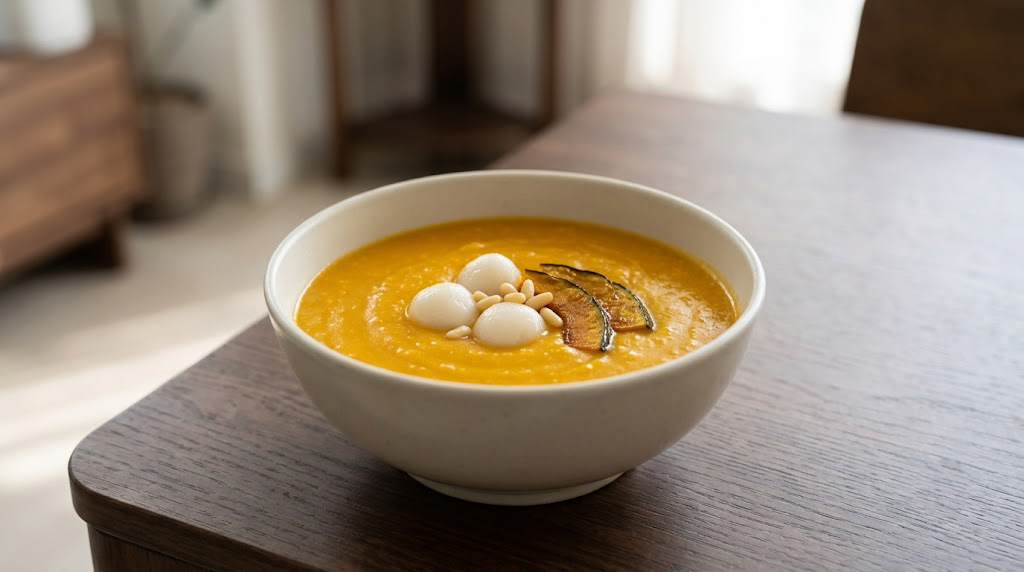
The Anti-Swelling Power of Hobak-Juk (Pumpkin Porridge)
Ask any local pharmacist or recovery nurse in Cheongdam what to eat after facial or body surgery, and their first answer is hobak-juk. This smooth, golden pumpkin porridge is the undisputed king of Korean post-procedure dining. Korean kabocha squash and sweet pumpkin are naturally rich in potassium, vitamin A, and beta-carotene. Potassium helps your kidneys flush out excess sodium and fluid, making it an essential tool for bringing down post-op edema and bruising.
The texture of hobak-juk is completely silky. Chefs simmer steamed pumpkin with glutinous rice flour, producing a velvety soup that requires zero chewing. It feels gentle on sore throats caused by general anesthesia intubation and fits neatly into soft-food protocols after jaw or nasal surgeries.
To get the highest quality version in Gangnam, skip instant grocery store tubs and visit a dedicated juk-jip (porridge shop). Bonjuk Signature near Gangnam Station (Exit 10) cooks fresh batches using real sweet pumpkin without excessive added sugar. If you are staying closer to the plastic surgery hubs in Sinsa-dong, Juk Iyagi near Sinsa Station Exit 1 offers fresh hobak-juk with optional rice cake balls that you can easily leave out if your mouth is sensitive.
Clean Bone Broths: Low-Sodium Seolleongtang and Samgyetang
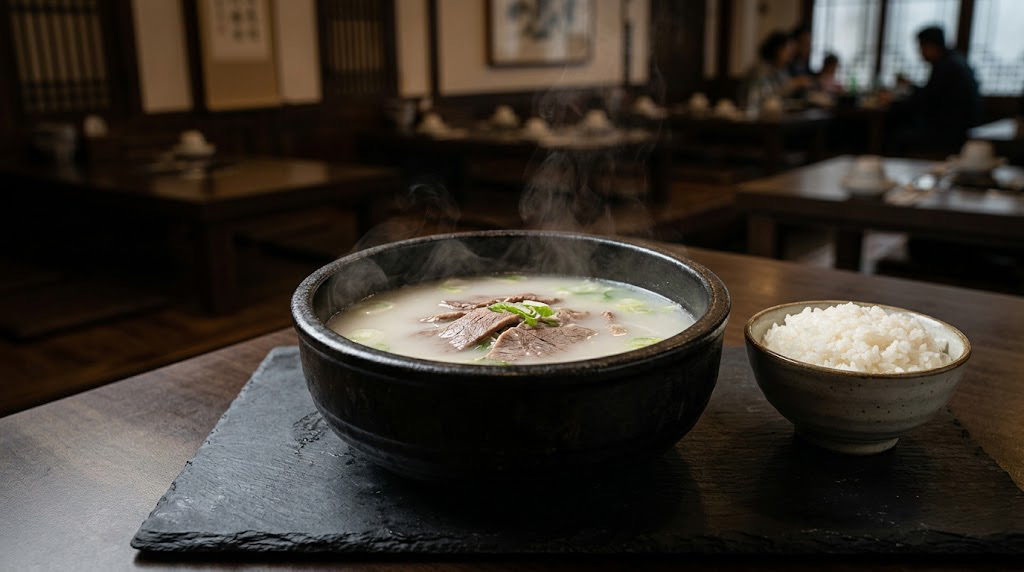
Protein and collagen drive tissue repair after invasive procedures. In Gangnam, your best source of slow-simmered animal protein comes in a hot stone bowl. Seolleongtang is a milky white ox bone soup cooked for twelve to twenty-four hours until the marrow, collagen, and connective tissues dissolve into broth. Samgyetang is a young ginseng chicken soup stuffed with glutinous rice, jujubes, and garlic, cooked until the meat falls off the bone.
These broths are naturally unseasoned when they arrive at your table. Korean restaurants serve bone soups without added salt, placing a small dish of sea salt and chopped scallions on the side so diners can season their own bowls. This custom is a massive advantage for surgery patients who need to strictly limit their sodium intake to avoid fluid retention.
Head to Yeongdong Seolleongtang in Jamwon-dong, just a short walk from Sinsa Station. Operating since the late 1970s, this local institution serves rich, unseasoned ox bone broth around the clock. Skip the kimchi and salted scallions during your first few recovery days. Drink the warm, collagen-rich broth plain or stir in a scoop of soft white rice.
For chicken broth, visit Nonhyeon Samgyetang in Nonhyeon-dong. Their clear broth is mild, deeply soothing, and easily digestible. You can ask the staff for sogeum eop-si (without salt) to ensure your broth remains completely plain.
Gourmet Porridges for Advanced Soft-Food Recovery
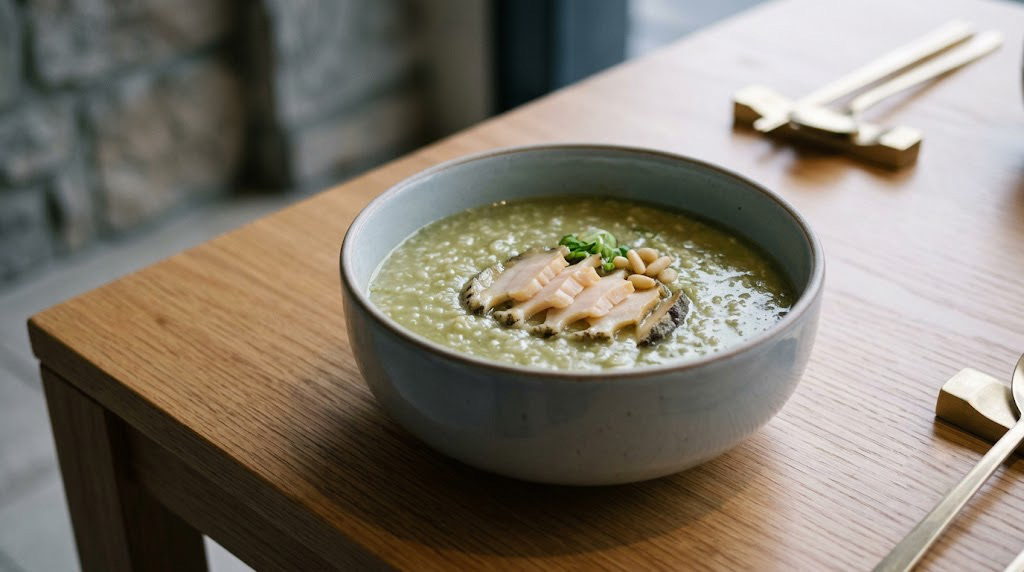
As your appetite returns and your doctor approves thicker textures, you can transition to savory porridges packed with lean seafood and nuts. Abalone porridge, known as jeonbok-juk, is a prized recovery dish across South Korea. Abalone contains high concentrations of zinc, iron, and protein, which accelerate wound closure and replenish red blood cells after blood loss.
Jat-juk, or pine nut porridge, is another high-calorie, low-volume option ideal for patients who feel nauseous or struggle to consume large portions. Pine nuts are blended with soaked rice and water into a creamy, pale cream soup rich in healthy monounsaturated fats.
Bonjuk Executive Cafe in Apgujeong-dong serves elevated versions of these traditional bowls. Their jeonbok-juk comes in variable protein concentrations, allowing you to order double or triple abalone portions for extra nutritional density. The kitchen can chop the abalone into fine pieces or blend it entirely into the rice if you cannot chew solid bits.
Always ask the servers to leave off the banchan (traditional side dishes) like pickled squid (ojingeo-jeotgal) or spicy kimchi if your mouth has open wounds or if you are avoiding spicy, fermented, or high-sodium condiments.
Modern Warm Grain Bowls and Gentle Proteins in Sinsa and Apgujeong
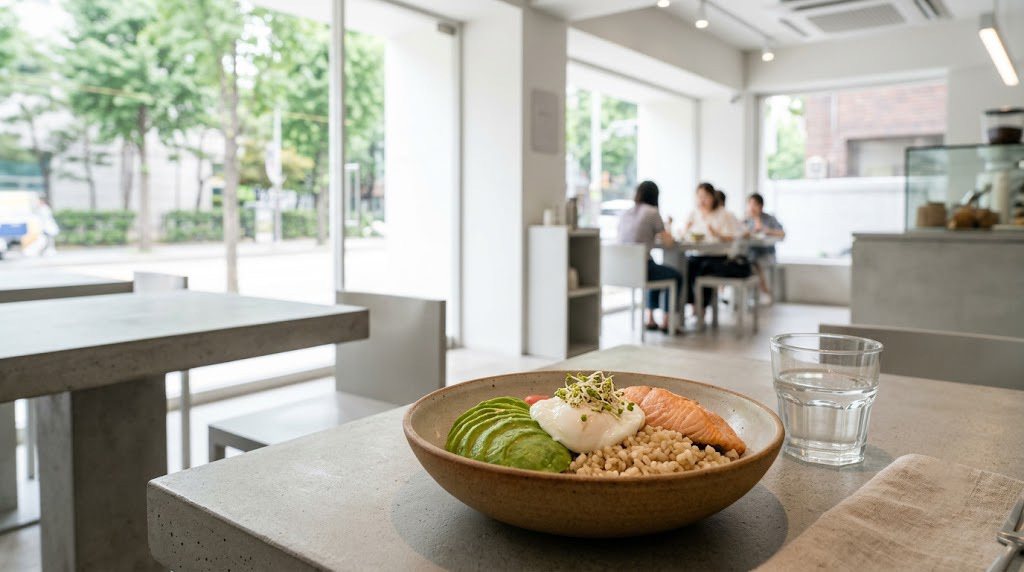
Once you move past the liquid and puree phases, you need solid nutrition that stays light on your stomach. Sinsa-dong and Apgujeong lead Seoul in clean-eating dining concepts, catering to fitness enthusiasts and post-op patients alike.
Look for warm grain bowls built around soft, high-protein bases like steamed tofu, poached eggs, avocado, and flaked salmon or steamed beef. Salady, a popular chain with dozens of locations across Gangnam, offers warm grain bowls featuring brown rice, soft greens, and mild roasted chicken. You can easily customize your bowl through their digital kiosks, selecting oil-free dressings on the side and holding raw onions or spicy peppers.
If you prefer hot, soft Korean comfort food that requires minimal chewing, visit a local sundubu-jjigae (soft tofu stew) shop. Request a non-spicy, clear broth version called baek-sundubu (white soft tofu). At Geumgangsan Sundubu in Yeoksam-dong, freshly made uncurdled tofu is served hot in a clear, delicate broth with a cracked egg. The texture is silky, rich in plant protein, and easy to slide down without strain.
Delivery Apps and Practical Recovery Tips for Expats
Navigating Gangnam restaurants in bandages or compression garments can feel intimidating. Many recovery patients prefer eating inside their hotel rooms or serviced apartments during the first three to five days post-op.
Fortunately, Seoul has world-class food delivery logistics. Expats and medical tourists can use Coupang Eats or Shuttle Delivery. Shuttle Delivery operates fully in English and accepts foreign credit cards without requiring a local South Korean phone number or alien registration card. Coupang Eats offers an English interface and real-time GPS tracking.
When placing food orders through delivery apps, use the special instruction box to communicate your dietary restrictions directly to the kitchen staff:
- Write “Sogeum-jeok-ge put-ae-ju-se-yo” for low salt.
- Write “An-mae-woon-geol-lo ju-se-yo” for non-spicy preparation.
- Write “Guk-mul-man ma-ni ju-se-yo” to request extra broth.
Order two or three portions of bone broth or pumpkin porridge at once. Keep the extra containers in your hotel mini-fridge. You can easily warm them up using your room’s electric kettle or microwave, giving you instant access to healing foods whenever your pain medication schedule requires a light meal.